




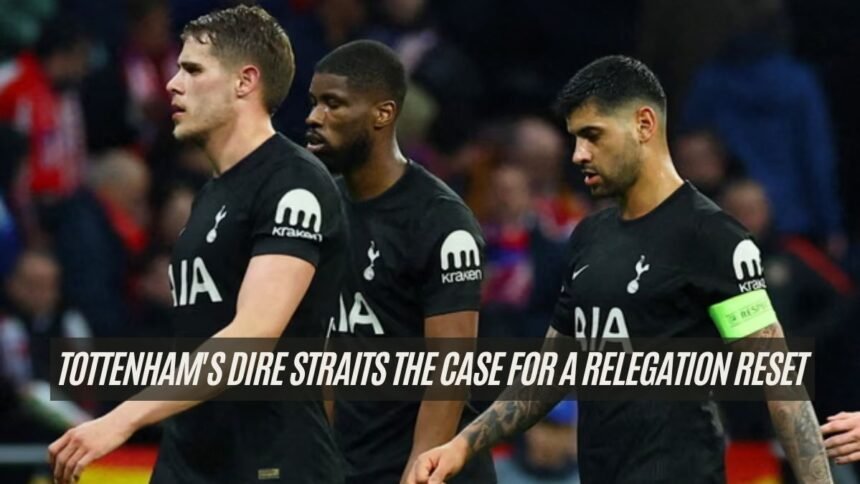
Tottenham Hotspur finds itself at a peculiar crossroads. The club, lauded for its phenomenal commercial growth and state-of-the-art stadium, faces a stark reality on the pitch. A planned talk by the club’s chief revenue officer, Ryan Norys, at the South by Southwest festival was abruptly cancelled this week. Norys, credited with a 40% rise in commercial revenue over three years, was set to discuss Tottenham’s evolution into a global cultural brand. However, an advertisement for the event on LinkedIn sparked outrage among fans, forcing its withdrawal. This incident perfectly encapsulates the current disconnect. While off-field ventures thrive, the team’s performances suggest an alarming evolution away from the fundamentals of football itself. The club appears to be drifting beyond defending, beyond possession, beyond goalkeeping, beyond tactics, beyond teamwork, beyond basic competence, and perhaps, even beyond the Premier League.
The Commercial Juggernaut Versus Footballing Decline
The Tottenham Hotspur Stadium stands as a testament to modern sporting infrastructure. It is a venue designed for more than just football. Visitors can explore the Skywalk, attend rugby and American football matches, or enjoy concerts. This multi-purpose approach underpins a wildly successful financial model. It has propelled Spurs into the Deloitte Money League top 10 and secured a seat at the ill-fated Super League table. Yet, this commercial prowess casts a long shadow over the team’s on-field struggles. The message to long-standing fans, who remember White Hart Lane and trekked to Wembley, feels subtle yet profound. This may be their home, but it is not truly theirs anymore.
The stark contrast between financial success and sporting failure creates a macabre narrative. For a club that once sacked a manager for finishing fourth, its recent record of 12 points from 20 games is nothing short of catastrophic. The predictions models suggest a 20% chance of relegation. Bookmakers double that figure. The fans who watch them double it again. The sound of water circling the drain is becoming increasingly audible.
Managerial Merry-Go-Round and a Culture of Excuses
The managerial situation at Tottenham has been a revolving door since Mauricio Pochettino’s departure in 2019. The decision to replace him with José Mourinho felt like an act of self-sabotage, tearing down a distinct playing philosophy for reactive, low-block football. Subsequent appointments, including the limited Nuno Espírito Santo and the condescending Antonio Conte, followed by interim spells, have further eroded the club’s identity. Even the brief, bright spark of Ange Postecoglou’s early tenure eventually dimmed.
An unfortunate common thread links many of these managers. It is a rehearsed liturgy of excuses. The narrative often suggests, “I am a winner. You, the players and the fanbase, are ingrained with losing. It is part of your DNA. I have tried everything, but ultimately, you are terminal losers. If you lose on my watch, it is not my fault.” This constant messaging, that failure is inherent to the club, inevitably seeps into the squad’s psyche. It creates a paralysis, where elite footballers appear to be negged out of basic competence, struggling with fundamental actions.
Recruitment Catastrophes and a Gutted Squad
A significant contributor to the current malaise is the club’s catastrophic recruitment strategy between 2016 and 2022. During these years, Tottenham suppressed its relative wage bill while maintaining on-pitch success. This fostered a dangerous fantasy that the playing product would sustain itself. Objectively successful signings have been few and far between over the past decade. While Lucas Bergvall, Micky van de Ven, and Pedro Porro show promise, the core of Pochettino’s great team, including Harry Kane, Son Heung-min, and Eric Dier, was slowly gutted. These players, who loved the club and provided a vital link between the team and the fans, were replaced neither in quality nor stature.
Despite these issues, the current squad remains richly talented. It boasts World Cup winners, coveted talents, and seasoned internationals across positions. This makes their collective struggle even more perplexing. It underlines how even very good players are contingent on a nurturing environment. Culture, confidence, and a clear playing identity are paramount. The succession of managers, each draining a little life from the place, has systematically dismantled these vital elements.
The Unthinkable Relegation A Necessary Evil
To many, the idea of Tottenham Hotspur being relegated is unthinkable, a truly spectacular failure in English football history. However, with apologies to the shell-shocked Spurs fans, it might be exactly what needs to happen. Accountability for failure is crucial if sport is to retain any meaning. A relegation could serve as a mythical horror story in boardroom circles, a stark warning against prioritizing commercial ventures over sporting integrity. It is what happens when a club stops believing in the magic of football.
A relegation would force a reset, a dose of humility. A trip to Lincoln in League One, for instance, might serve as a powerful reminder of why football truly matters. It is not about digital marketing strategies or commercial safety nets. It is about ritual, rite, and the sheer joy of players playing for the love of the game. Perhaps the darkest sky truly does precede the dawn.
Tottenham’s current predicament is a complex tapestry woven from commercial brilliance and sporting neglect. The club has achieved phenomenal success off the pitch, but this has come at the expense of its footballing soul. A string of poor managerial choices, disastrous recruitment, and a pervasive culture of excuses have left a richly talented squad performing far below its potential. While the thought of relegation is painful for supporters, it may be the only path to a fundamental reset. A harsh lesson could force Tottenham to rediscover its core identity, rebuild with genuine purpose, and reignite the passion that truly defines a football club.