






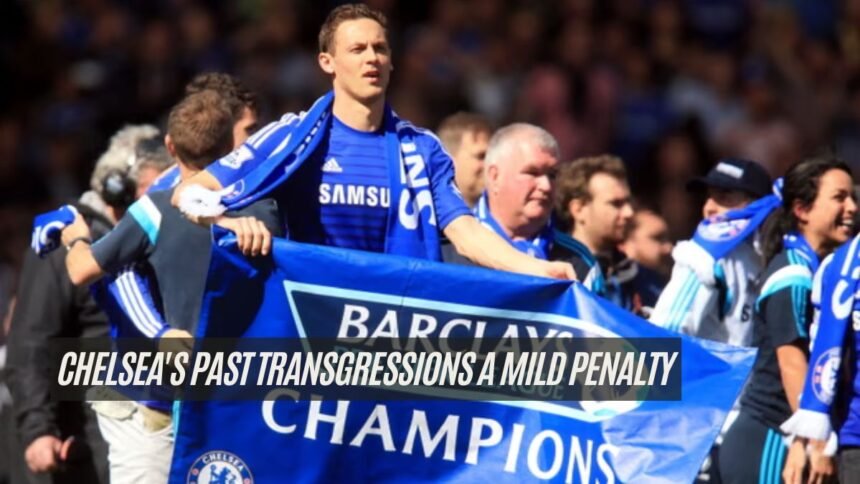
The Premier League has concluded its lengthy investigation into Chelsea Football Club, delivering a judgment that highlights significant financial irregularities during the Roman Abramovich ownership era. This period, marked by an impressive eight-year trophy spree, involved what the league described as “deception and concealment.” More than 30 breaches were identified, encompassing at least £47 million in off-book payments. These payments were linked to major player transfers, including star names like Eden Hazard, Willian, David Luiz, and Nemanja Matic. Many of these clandestine transactions, routed through Abramovich’s intricate network of offshore companies, first came to light through a Guardian investigation in 2023. Despite the apparent gravity of these transgressions, the resulting punishment has raised eyebrows across the football world. The club faces a relatively modest £10.75 million fine and a suspended transfer embargo, a sanction that may never actually be enforced. This outcome prompts a crucial question did Chelsea truly get off lightly, and are there more severe consequences still to come?
The Nature of the Breaches and Their Sporting Impact
The Premier League’s findings paint a clear picture of systematic financial misconduct. Over 30 separate breaches were recorded, all stemming from undisclosed payments totalling at least £47 million. These sums were directly connected to high-profile player acquisitions that significantly bolstered Chelsea’s squad during a period of immense success. Players such as Eden Hazard, whose impact at Stamford Bridge was transformative, Willian, David Luiz, and Nemanja Matic, were all part of deals where off-book payments were made. These secret transactions, often funnelled through Roman Abramovich’s complex web of offshore entities, were designed to circumvent financial regulations. The league’s ruling explicitly mentions “deception and concealment,” indicating a deliberate effort to hide these financial dealings from official scrutiny. This level of sustained, hidden expenditure undoubtedly provided Chelsea with a competitive edge, allowing them to secure top talent in a highly competitive transfer market. The ability to invest heavily, even with hidden funds, directly contributed to the club’s on-field dominance, translating into numerous trophies during this controversial period.
A Mild Reprimand or a Strategic Resolution
The immediate consequences for Chelsea appear surprisingly lenient when viewed against the backdrop of such serious and extensive breaches. The £10.75 million fine, while substantial in absolute terms, is offset by a unique financial arrangement. The Clearlake consortium, which acquired Chelsea from Abramovich in a £2.5 billion takeover, wisely included a £150 million “holdback” clause. This fund is specifically earmarked to cover any costs or penalties arising from the Abramovich era. Therefore, the Premier League fine, along with a previous £8.5 million UEFA penalty in 2023 for incomplete financial reporting, is absorbed by this pre-existing provision. For the current ownership, this means the penalties have minimal direct impact on their operational finances. The suspended transfer embargo, which would only be activated if Chelsea commits further breaches within the next two years, also offers little immediate threat. The club can effectively continue its operations without breaking stride, as noted by many observers.
Expert Scrutiny and the Question of Sporting Advantage
Stefan Borson, a respected football finance expert and head of sport at McCarthy Denning, expressed significant surprise at the Premier League’s approach. He highlighted the league’s previous eagerness to impose points deductions in other profitability and sustainability cases, citing examples involving Leicester City, Nottingham Forest, and Everton. Borson finds it particularly striking that the Premier League ruling made no mention of Chelsea having gained a “sporting advantage” from these admitted breaches. This omission, he suggests, might explain the absence of a sporting sanction such as a points deduction. He argues that signing players like Willian and Hazard in competitive situations, through £47 million in off-book payments involving deliberate deception, constitutes serious matters directly related to sporting performance. Such egregious conduct, in his view, would ordinarily warrant a sporting penalty.
Self-Reporting and the Unfinished Business
One factor contributing to Chelsea’s perceived clemency is the self-reporting of some breaches by the new ownership. However, the Premier League’s judgment also confirms that its investigation extended “larger than the matters recorded in the club’s own disclosures,” involving substantial other investigative steps. Borson questions the extent to which self-reporting should mitigate penalties, especially given the enduring benefits that the present-day club continues to enjoy from past actions. He draws a parallel, suggesting that if Manchester City were to be sold tomorrow, no one would expect their ongoing charges of rule breaches to simply disappear. The Football Association also launched its own investigation into Chelsea last year, charging the club with 74 rule breaches. This FA inquiry remains ongoing, with no outcome yet in sight. The Premier League’s ruling intriguingly mentions that its board considered “the potential sanction which may be imposed upon the club as a consequence off the FA charges.” This could imply an expectation that the FA will follow suit with a financial penalty, or it might suggest the Premier League felt less need for a sporting sanction because it anticipates one from the FA. Until the FA’s verdict is delivered, Chelsea’s owners cannot fully relax. Any new revelations emerging in the interim could also prove highly embarrassing for all parties involved.
A Sigh of Relief for Stamford Bridge
For now, Borson believes Chelsea will be breathing a collective sigh of relief. He credits Chelsea’s legal team with doing “a really good job,” managing to convince the Premier League, an organisation known for pushing for severe penalties, to adopt a more lenient stance. He also points out a complex ethical implication of the financial penalty. Since the fine is absorbed by the holdback amount from the club’s sale proceeds, and Roman Abramovich had pledged to donate those funds to victims of the war in Ukraine, the ultimate impact of Chelsea’s rule-breaking will, in effect, be borne by those victims. This is due to the ongoing dispute between the oligarch and the British government over the allocation of these funds. It adds another layer of complexity to an already intricate situation, highlighting how past financial transgressions can have far-reaching and unexpected consequences.
The Premier League’s judgment against Chelsea closes one chapter on the club’s past financial irregularities, yet it leaves many questions unanswered. While the current ownership navigates this period with a degree of financial insulation, the perception of a lenient penalty persists among experts and fans alike. The absence of a sporting sanction, particularly a points deduction, remains a point of contention given the explicit findings of “deception and concealment” and the direct link to acquiring top-tier talent. The ongoing Football Association investigation looms large, representing a potential future hurdle for the club. Until its verdict is delivered, the full ramifications of the Abramovich era’s financial practices will not be entirely known. This saga underscores the continuous challenge of financial fair play and regulatory oversight in modern football, reminding us that the pursuit of sporting glory must always align with ethical and transparent financial conduct.