





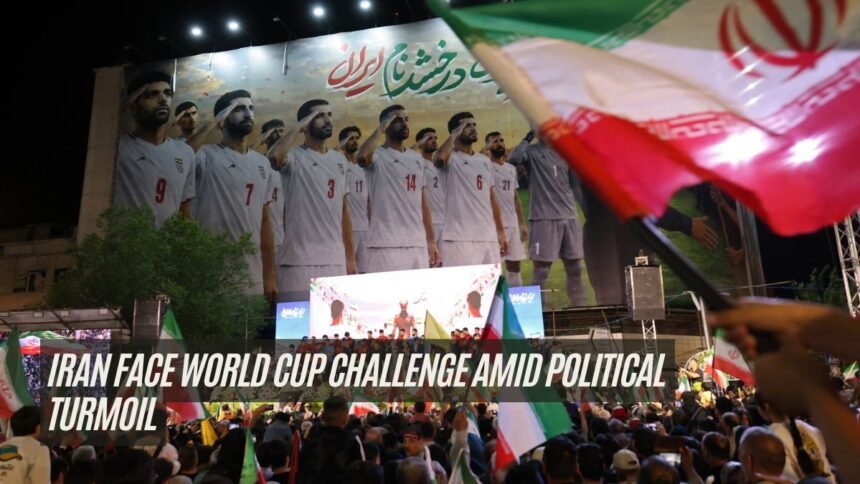
Few teams arrive at the 2026 World Cup carrying as much uncertainty as Iran. While Team Melli secured qualification with relative comfort and were among the earliest nations to book their place at the tournament, events away from football have overshadowed their preparations.
Political tensions involving Iran, the United States, and Israel created serious questions about the team’s participation. With all three of their Group G matches scheduled to take place on American soil, concerns extended well beyond football. Throughout the buildup, head coach Amir Ghalenoei and his staff were forced to navigate a series of challenges while attempting to keep players focused on the competition itself.
Despite the distractions, Iran have continued refining their plans for the tournament and remain determined to compete at the highest level.
Tactical Flexibility Could Be Key
Recent friendly matches offered insight into how Iran may approach different opponents during the World Cup.
Against Nigeria in March, Ghalenoei deployed an unusual 3-6-1 system. The coach described the setup as a defensive alternative, suggesting it could be reserved for stronger opponents, including a potential showdown with Belgium.
A few days later, Iran switched shape entirely against Costa Rica, lining up with a traditional 4-4-2 formation. The contrast between the two matches highlighted the coaching staff’s willingness to adapt according to the opposition rather than relying on a single tactical identity.
Even so, the formation most closely associated with Iran remains the 4-2-3-1 system that guided them through much of the qualification campaign.
Certain players appear untouchable regardless of the tactical arrangement. Veteran goalkeeper Alireza Beiranvand is expected to start at a third consecutive World Cup. In central defence, Shojae Khalilzadeh remains the most trusted option, while Saeid Ezatolahi is considered the first-choice holding midfielder whenever fitness permits.
Further forward, captain Mehdi Taremi is guaranteed to spearhead the attack whether Iran operate with one striker or a front pairing.
One notable absentee is Sardar Azmoun. The forward became a controversial figure after photographs emerged showing him alongside the ruler of the United Arab Emirates, whose position during the recent conflict generated criticism inside Iran. As a result, he has been left out of the squad.
Belief Remains Strong Within the Camp
Although controversy has followed the national team in recent months, confidence has not disappeared from the dressing room.
Iran made a late decision to relocate their World Cup base from the United States to Mexico shortly before the tournament. Nevertheless, Ghalenoei continues to insist that his players are capable of producing something memorable.
The coach has repeatedly praised the sacrifices made by the squad throughout qualification, stressing the effort and commitment shown during a difficult period. In his view, the technical quality within the group is sufficient to make a significant impact on the global stage.
Ghalenoei Seeks Redemption
The tournament carries special significance for Ghalenoei personally.
As a player, the former midfielder spent most of his career with Esteghlal, one of Tehran’s most famous clubs. His playing days were marked by a fiery temperament, most famously resulting in a lengthy suspension following an incident during the Tehran derby.
His managerial career has been far more successful. Over the years, he has established himself as one of Iranian football’s most decorated coaches. Yet his confrontational style has often divided opinion among supporters and media alike.
This is his second spell leading the national team. His first tenure ended shortly after Iran’s exit from the 2007 AFC Asian Cup, a dismissal that remains a source of frustration for him. A strong World Cup performance would provide an opportunity to silence many of the critics who have questioned him over the years.
Taremi Holds the Key
Iran’s hopes may ultimately depend on the form of their captain.
Although Mehdi Taremi has never enjoyed universal popularity among supporters, his importance to the national side is unquestionable. Successful spells in European football with Porto, Inter, and Olympiakos have elevated both his reputation and influence.
Years of competing at elite level have transformed him into one of the squad’s leading voices. Beyond his goalscoring ability, Taremi contributes defensively and is known for his relentless work rate.
His most dangerous weapon remains his movement behind defensive lines. Few Iranian attackers are as effective at creating one-on-one situations with goalkeepers. Once in those positions, Taremi possesses both the composure to finish chances and the awareness to draw fouls that can change matches.
Ghayedi Could Be the Surprise Package
Among the players capable of making an unexpected impact is Mehdi Ghayedi.
For years, many observers predicted that the winger would become one of Iran’s biggest stars. However, injuries, inconsistency, and off-field controversies have repeatedly interrupted his progress.
Now 27, he enters what should be the prime years of his career. The Al-Nasr winger offers exceptional pace, sharp dribbling ability, and a natural eye for goal.
His return from injury earlier this year immediately caught attention when he scored a spectacular goal against Costa Rica. If he can maintain fitness and confidence, Ghayedi could emerge as one of Iran’s most dangerous attacking threats during the tournament.
The Quiet Importance of Saman Ghoddos
While star names often dominate headlines, Saman Ghoddos has quietly become one of the squad’s most dependable figures.
Since making his international debut nearly ten years ago, the versatile midfielder has consistently delivered whenever called upon. Yet because he never played club football in Iran, he has not enjoyed the same level of support or media attention as many teammates.
His professionalism and positive attitude have earned widespread respect inside the dressing room. Born in Malmö, Sweden, Ghoddos previously played for Brentford before moving to Kalba in the UAE in 2024.
His ability to operate in multiple positions makes him one of the most valuable squad members available to Ghalenoei.
A Divided Fanbase Follows Team Melli
Support for the national team remains deeply fractured.
As was the case during the 2022 World Cup in Qatar, opinions among Iranians are sharply split. One group continues to support Team Melli regardless of political circumstances. Another views the national side as a symbol of the state and therefore struggles to rally behind it.
Travel restrictions mean that many of Iran’s supporters inside stadiums will likely come from the Iranian diaspora already living in the United States. A significant portion of that community is openly critical of the government in Tehran.
Political messages are therefore expected to remain visible throughout the tournament. FIFA is anticipated to prohibit the display of the pre-revolutionary Shir-o-Khorshid, or Lion and Sun, flag inside venues. Even so, chants backing former crown prince Reza Pahlavi may still be heard.
The unusual atmosphere could also produce scenes in which some spectators celebrate opposition goals or Iranian defeats, reflecting the deep divisions that continue to surround the national team.
Politics and Football Remain Closely Linked
Questions over Iran’s participation intensified following the outbreak of the recent conflict.
Iranian sports minister Ahmad Donyamali publicly suggested that attendance at the World Cup could become impossible under the circumstances. Concerns grew further when Donald Trump stated that security guarantees for the Iranian team might not be certain during travel in the United States.
Ghalenoei responded firmly, insisting that nobody could prevent Iran from appearing at the tournament.
Ultimately, officials decided the team would participate. One factor behind the decision was the belief that withdrawing could be interpreted as handing a political victory to Trump. Instead, Iranian authorities have framed the national team’s presence in North America as a symbolic success despite the tensions and security concerns.
Can Iran Deliver on the Biggest Stage?
The road to the World Cup has been unlike anything Iran have experienced in recent memory. Political controversy, tactical experimentation, squad debates, and divided public opinion have all combined to create an extraordinary backdrop.
Yet amid the noise, Team Melli still possess proven international performers, an experienced coach, and a squad determined to leave its mark. Whether those ingredients are enough to produce a historic campaign remains uncertain, but Iran will undoubtedly be one of the most closely watched teams when the tournament begins.