






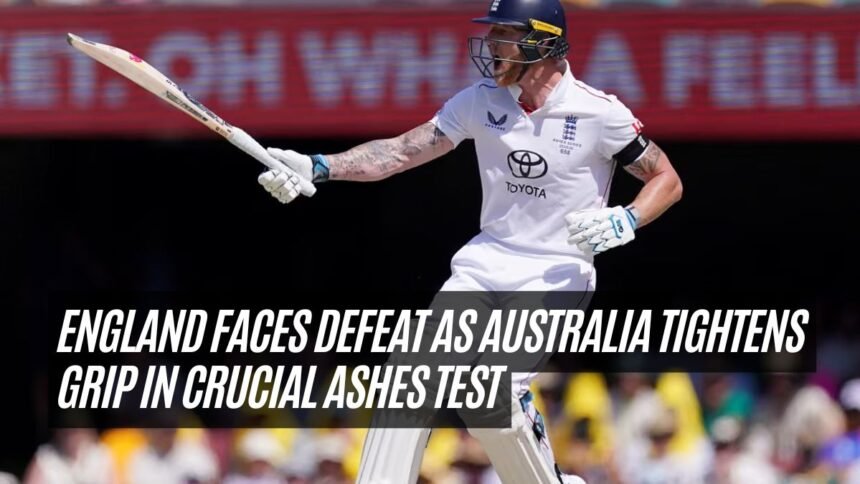
England’s hopes of saving the second Ashes Test are hanging by a thread after a grueling morning session at the Gabba left them still trailing Australia’s first-innings total. At lunch on day four, the visitors reached 162 for six, still 15 runs behind, with captain Ben Stokes and all-rounder Will Jacks engaged in a stubborn but precarious rearguard action.
The Queensland sun beat down relentlessly on the Brisbane ground, turning the contest into a battle of attrition. Australia’s bowlers, led by Michael Neser and Brendan Doggett, maintained a disciplined line, probing away at the defensive techniques of the two English batters. The hosts employed a short-ball strategy at times, with fields set for the bumper, a tactic that yielded few runs but increased the pressure.
Stokes, often considered the heartbeat of England’s aggressive ‘Bazball’ era, displayed uncharacteristic restraint. He was watchful, even troubled at times, particularly by Scott Boland who squared him up on several occasions. “In truth, often in the last few years Stokes has been the least Bazball of his troupe,” noted one observer from the press box, highlighting the captain’s shift into survival mode.
Jacks, at the other end, also weathered a testing spell. He was nearly caught behind off a glove from a Doggett bouncer, a chance Australia opted not to review. The pair navigated the session without losing a wicket, adding 23 valuable runs, but the mountain ahead remained steep.
The match situation was perfectly captured by a spectator’s email to the broadcast, read out during the session. “I’m at the Gabba, and it’s hot, so I’m seeking a balance between a match long enough to be worth coming in for and dropping dead of heat exhaustion,” wrote Kev McMahon. The sentiment reflected a day where the conditions were as much an opponent as the bowling attack.
Australia’s tactics were clear: choke the runs and wait for a mistake. Wicketkeeper Alex Carey stood up to the stumps for periods against Jacks, preventing him from charging, while field placements remained attacking. The crowd grew interested with every play and miss, sensing a decisive breakthrough was imminent.
The context of the final hour on day three loomed large over the morning. England had collapsed from a position of relative stability, losing four wickets late to hand Australia the initiative. Mitchell Starc, who had earlier contributed vital runs with the bat, was the chief destroyer, leaving Stokes with a monumental task to rebuild with the tail.
Historical precedent offers England little comfort. There has never been a tied Ashes Test, with only two draws in the entire history of the fixture. While some fans dared to dream of a lead big enough to pressure Australia, perhaps 180 runs, the more realistic view was that England needed to first erase the deficit, then build a target nearing 300 to have any real hope. An innings defeat was still a distinct possibility.
Off the field, Australian selectors received a timely reminder of batting depth. Nathan McSweeney, who played three Tests against India last year, smashed an unbeaten 226 for Australia A against the England Lions at a nearby ground in Brisbane. “Playing Test cricket exposes a few opportunities to learn,” McSweeney said when met by reporters at Allan Border Field on Saturday. His knock, a career-best, puts him firmly in the frame for future tours, particularly with an aging top order.
Back at the Gabba, the afternoon session promised high drama. The question was whether Stokes and Jacks could continue their defiance and shift the momentum, or if Australia’s persistent attack would finally break through and sprint towards a 2-0 series lead. With only four wickets left and a significant deficit still to clear, England’s resistance was admirable but faced overwhelming odds.