




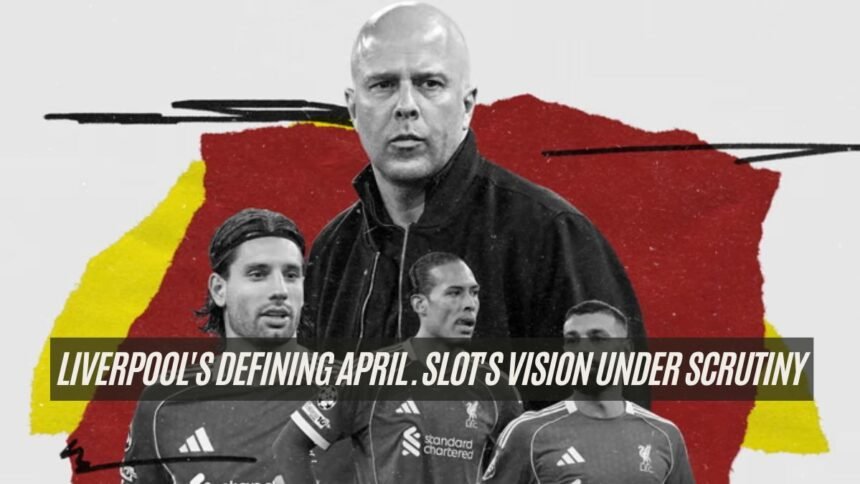
Jürgen Klopp’s recent return to Anfield, though for charitable reasons, served as a poignant reminder of the unshakeable bond and belief that once defined Liverpool. The joy his football brought, those pillars of his remarkable reign, appear to be weakening under Arne Slot. April now stands as a truly defining month, one that may determine whether these foundations remain intact or crumble entirely.
A Season at the Crossroads. High Stakes and Inconsistent Form
Two successive cup quarter-finals would typically indicate a season firmly on the right track for Liverpool. Showpiece occasions, such as the FA Cup clash against Manchester City and the Champions League encounter with Paris Saint-Germain, certainly whet the appetite for what May could potentially hold. This period could still bring redemption to a challenging title defence, with Mohamed Salah eyeing the exit a legend deserves and Dominik Szoboszlai on a mission to propel Liverpool to a Champions League final in his native Hungary.
However, the recent conviction that anything is achievable, a sentiment so strong under Klopp and even in Slot’s title-winning debut season, has been eroded. Liverpool’s inconsistent form does little to inspire confidence for these demanding cup assignments. Champions League qualification, absolutely essential to the club’s business model, and seemingly within reach given that fifth place in the Premier League is likely to suffice and Chelsea’s struggles under Liam Rosenior, is also now at risk. Six of Liverpool’s seven remaining league games are against teams currently in the top nine. This potentially defining sequence of five matches in 16 days culminates with the first Merseyside derby at Everton’s Hill Dickinson Stadium.
Before then, whether at the Etihad, the Parc des Princes, Anfield, or all three, Slot must convince an increasing number of dissenters and doubters that his vision for a team in transition can indeed succeed. Patience has been stretched not only by the football on offer this season. Last week’s announcement that most ticket prices will rise in line with inflation for the next three seasons, capped at 5%, was met with dismay by supporters. This comes from a club that posted record overall revenue of £703 million and the highest wage bill in the Premier League in its most recent set of accounts. The club’s supporters’ board, present during the discussions, saw their objections to the increases ignored, adding further strain to an already tense atmosphere.
Tactical Struggles and Player Performance
The Outlier and the Recurring Issues
That added strain arrived at the end of a month when Liverpool produced one truly impressive result and performance. The 4-0 dismantling of Galatasaray in the second leg of the Champions League last 16 was a glimpse of what could be. Galatasaray were admittedly feeble at Anfield, but that did not detract from the intensity and cutting edge on show. Yet, that display was the outlier in March.
Slot tried hard not to puncture the upbeat mood that night, but insisted it was unrealistic to expect a repeat performance at Brighton given the two-day turnaround. He has questioned Liverpool’s ability to cope with three games a week all season. His fears were realised by another defeat, Liverpool’s tenth of the Premier League campaign, which added significant weight to criticism regarding fitness levels, efficiency in front of goal, and overall organisation. The same issues plagued their defeat by bottom-placed Wolves and the home draw against Tottenham, a result that looked bad at the time and appears even more embarrassing with hindsight on Igor Tudor’s short, ill-judged tenure.
Internal Belief and External Pressures
There is no imminent threat to Slot’s position. Internally, from the owner, Fenway Sports Group, to the sporting director, Richard Hughes, there is recognition of the unprecedented challenges this season has presented. Significant injuries have prevented last summer’s ambitious transfer strategy from ever truly taking shape. Several new recruits have struggled to adapt, and established players, from Salah to Alexis Mac Allister, have endured downturns to an extent few could have envisaged. The Liverpool hierarchy hopes that last season showed the true Slot, not this one, believing a title-winning coach deserves the opportunity to prove as much.
Their resolve, however, will be severely tested should Liverpool’s decline be exposed by City and PSG, and should the team fail to secure Champions League qualification. Champions League revenue is vital for what is expected to be another busy summer in the transfer market. An entirely new right flank is just one requirement, with Salah’s potential departure, Conor Bradley’s rich promise stifled by injuries, and Jeremie Frimpong lasting only 13 minutes of the Netherlands’ friendly against Ecuador before injury struck again.
The Pivotal Role of Key Signings
Slot has arguably underperformed, along with his team, this season. His tactical idea is to control matches by controlling possession. While Liverpool’s possession statistics are up compared with the title-winning campaign, they have been exposed repeatedly in transition. Slot has not yet found a consistent solution. What may ultimately rescue the 47-year-old in the final reckoning is what has worked against him from day one the form and fitness of Alexander Isak.
The most expensive piece of Liverpool’s near-£450 million recruitment drive last summer was bought to provide the penetration Slot felt his team lacked towards the end of last season. He was expected to establish a devastating rapport with Florian Wirtz. This double act, costing a potential £241 million, has barely been seen, playing together for merely 436 minutes and combining for just one goal. That goal, scored in December’s win at Spurs, resulted in Isak suffering a fractured fibula and ankle injury from Micky van de Ven’s challenge.
Isak returned to team training recently. Despite signs of improvement before his injury, he will have much to prove when he returns to competitive action. The next few weeks would be an ideal time for the first repayment on Liverpool’s £125 million investment fee, plus his six-year contract. Slot regularly excused Isak’s slow start on account of the striker missing pre-season while forcing his acrimonious departure from Newcastle. That excuse did not entirely wash at the time. While it would have more credibility after a serious injury, Isak, and Wirtz, need to produce as a matter of urgency. It would reflect poorly on the recruitment of Hughes and Michael Edwards, FSG’s chief executive of football, to sack Slot without seeing whether their grand plan of last summer can come to fruition. Slot has a disillusioned fanbase to placate, starting with the visit to a City team buoyant after their League Cup final victory over Arsenal.
The adoration for Liverpool’s former manager, Jürgen Klopp, inadvertently brought into focus the frostiness towards Slot, less than a year after he guided the club to a record-equalling 20th league title. That triumph exceeded all expectations in the aftermath of Klopp’s departure. However, expectations change when reigning champions spend almost £450 million on fresh talent, and Liverpool have fallen short all season. There remains enough quality within the squad to salvage the campaign. The upcoming matches will be a true test of Slot’s leadership, the team’s resilience, and the club’s direction for the seasons to come.