





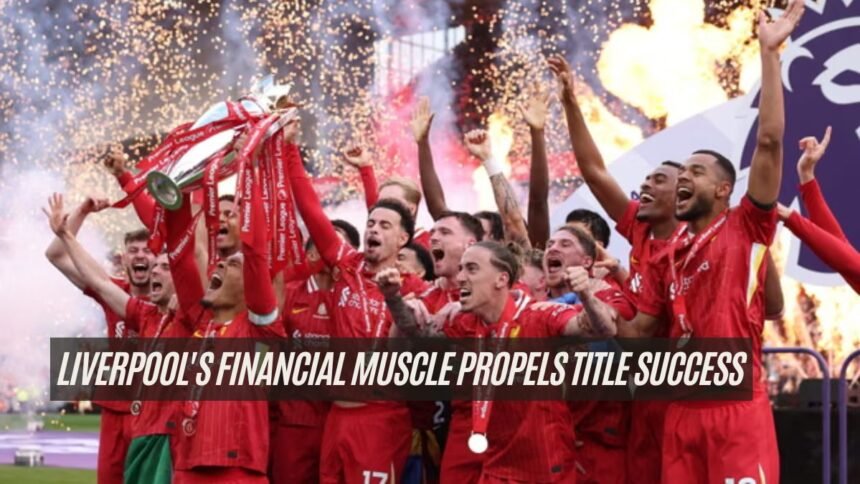
Liverpool Football Club achieved a significant milestone last season, securing their 20th league title, a triumph underpinned by the Premier League’s highest wage bill. The club’s latest financial accounts reveal a strategic investment in talent that directly correlated with on-field success. This financial commitment, coupled with a return to the prestigious Champions League, saw revenue soar to unprecedented levels, painting a picture of a well-managed entity balancing ambition with fiscal responsibility. The figures offer a deep insight into the economic landscape of elite football and Liverpool’s position within it, highlighting how financial prowess is increasingly intertwined with sporting glory.
The Economic Engine Behind Anfield’s Glory
Liverpool’s financial results for the year ending 31 May 2025 showcase a club operating at the pinnacle of European football, both on and off the pitch. The wage bill escalated by a substantial £42 million, reaching an imposing £428 million. This figure, the highest in the Premier League, notably surpassed rivals Manchester City, who reported £408 million. The increase included performance-related bonuses, a testament to the squad’s record-equalling title triumph under Arne Slot in his debut season as head coach. This direct correlation between investment in player wages and silverware underscores a clear strategy at Anfield.
Revenue Growth and Profitability
The club’s record-breaking revenue of £703 million was a direct consequence of their Premier League success and, crucially, their return to the Champions League. This marked an £89 million increase in total revenue, solidifying Liverpool’s position as the highest-ranked Premier League club in the Deloitte Football Money League. Commercial revenue saw a healthy boost of £15 million, reaching £323 million, while matchday revenue also climbed by £14 million to £116 million. Despite these impressive revenue streams, the significant rise in wages, which pushed administrative costs up by £57 million to £657 million, resulted in a relatively modest post-tax profit of £8 million. This contrasts sharply with the £57 million loss incurred in the 2023-24 season, a period marked by the club’s absence from Europe’s premier club competition. The healthy wages-to-revenue ratio of 61 percent indicates a sustainable financial model, despite the substantial outlay.
Strategic Financial Management
Jenny Beacham, Liverpool’s chief financial officer, articulated the club’s philosophy. She stated, “We make no secret of our desire to run and operate a financially sustainable club, to grow revenue streams, and to do all we can off the pitch to help bring more success on it.” Beacham highlighted the 2024-25 season as a prime example of this strategy in action, with record revenues coinciding with the men’s team securing their 20th league title. She acknowledged the significant cost challenges, including rising administrative, staffing, and operational expenses, alongside the imperative to compete at the highest level across both men’s and women’s teams. These accounts, however, do not yet reflect last summer’s record transfer spending of almost £450 million, including the British record signing of Alexander Isak for £125 million from Newcastle. This future expenditure further emphasizes the club’s commitment to maintaining a competitive edge.
Nurturing Future Talent The Rio Ngumoha Story
While financial figures dominate headlines, the development of young talent remains a cornerstone of Liverpool’s long-term strategy. Arne Slot recently emphasized the critical importance of Champions League qualification, stating it “does have an enormous impact on the way this club is run.” This ambition extends to the careful nurturing of promising prospects like Rio Ngumoha.
Arne Slot’s Measured Approach
The 17-year-old Ngumoha made a significant impact in Liverpool’s late victory at Nottingham Forest, prompting calls for his inclusion in the starting lineup against West Ham. Slot, however, maintained a measured approach, insisting it was not difficult to resist the clamour to start the level-headed teenager. He praised Ngumoha’s maturity, noting that the youngster had not been carried away by the hype surrounding his performance, especially after his influential switch to replace Mohamed Salah on the right wing.
Slot highlighted Ngumoha’s rare ability to excel in one-on-one situations, a quality he believes is increasingly uncommon in modern football. “We have to keep his special quality and that is beating players in one-v-one,” Slot explained. He stressed the importance of allowing Ngumoha to continue attempting these decisive dribbles, even if they do not succeed every time. The manager’s comments reflect a deep belief in Ngumoha’s potential and a commitment to careful development, ensuring the player maintains his unique attributes while integrating into the demands of elite football. This patient approach is crucial for translating raw talent into consistent, world-class performance.
Liverpool’s latest financial disclosures paint a vivid picture of a club that has successfully aligned substantial financial investment with on-field excellence. The record wage bill and soaring revenues underscore a strategic approach that prioritizes success, acknowledging the vital link between economic strength and sporting achievement. As the club navigates future challenges, including significant operating costs and continued high transfer spending, the emphasis on Champions League qualification remains paramount. Simultaneously, the careful development of prodigious talents like Rio Ngumoha under Arne Slot’s guidance signals a commitment to sustainable success, ensuring that while the financial engine powers the present, a robust pipeline of talent secures the future.