




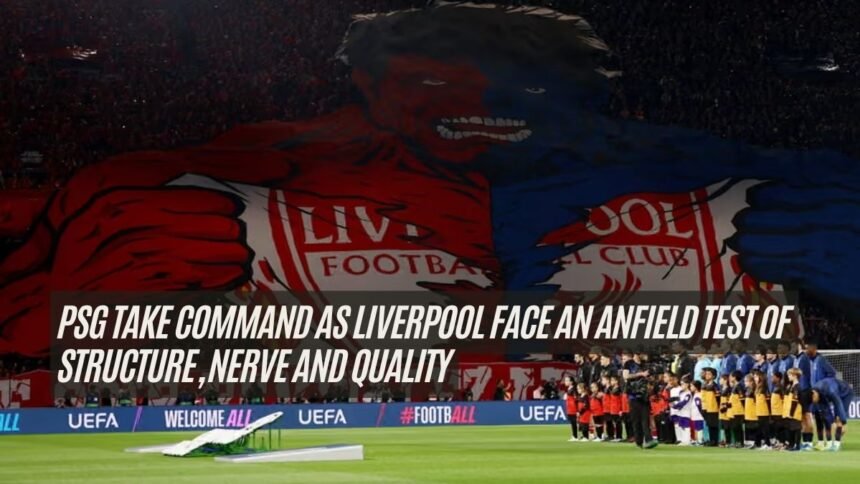
Paris Saint-Germain produced a controlled, high-quality 2-0 win over Liverpool in the first leg of their UEFA Champions League quarter-final on April 8, 2026, and the margin may flatter the visitors.
Désiré Doué opened the scoring in the 11th minute, Khvicha Kvaratskhelia added a second in the 65th, and the underlying numbers underline the scale of PSG’s control: 74% possession, 18 shot attempts to Liverpool’s 3, and 6 shots on goal to Liverpool’s 0.
PSG vs Liverpool Result: Why the 2-0 Scoreline Matters
We should begin with the central truth of this tie: PSG were not merely better than Liverpool in Paris; they dictated the entire match. Luis Enrique’s side controlled possession, set the tempo, and repeatedly exposed Liverpool whenever the visitors tried to engage higher up the pitch.
Reuters reported that PSG’s midfield trio of Vitinha, João Neves and Warren Zaïre-Emery “bossed” the contest, while Liverpool spent long periods reacting rather than imposing themselves.
At the same time, the tie is not finished. PSG created enough chances to leave the first leg with an even larger advantage, with Ousmane Dembélé and Nuno Mendes both missing opportunities that could have made the return at Anfield largely procedural.
Instead, Liverpool travel home only two goals down, which keeps the quarter-final alive even after an evening in which they offered almost no attacking threat.
Arne Slot’s Tactical Plan Left Liverpool Passive and Narrow
Liverpool lined up in a 3-5-2 shape, effectively defending with five at the back, and Mohamed Salah was left on the bench from the start. The intention was clear: reduce space, survive PSG’s pace, and keep the tie manageable for the second leg.
In practice, the plan surrendered territory, gave PSG repeated access to the flanks and half-spaces, and left Liverpool too deep to build counterattacks with any consistency. ESPN’s match page listed the shape as 3-5-2, and Reuters reported that Liverpool’s cautious setup never contained PSG for long.
Slot’s own post-match assessment was revealing. He said Liverpool were ripped apart when they pressed high and described the second half as more about survival than control.
That admission captures the entire tactical problem. Liverpool were neither aggressive enough to disrupt PSG’s buildup nor secure enough in possession to rest with the ball. The result was a match played almost entirely on PSG’s terms.
Why PSG’s Midfield Controlled the Quarter-Final First Leg
The clearest difference between the sides was in midfield. PSG combined technical quality with positional discipline, circulating possession patiently and then accelerating through gaps as soon as Liverpool’s shape bent out of line.
When a team records 74% possession and holds the opposition to zero shots on target, that is not only domination of the ball; it is domination of where the match is played and how each phase unfolds.
We saw PSG use that control in two distinct ways. First, they slowed Liverpool’s press by moving the ball cleanly through the first and second lines. Then, once Liverpool retreated, PSG changed pace and attacked the space around the box with runners arriving from different angles.
That is why Liverpool’s back line kept getting stretched and why PSG could create a stream of chances without ever looking rushed. Reuters’ reporting on PSG’s patient possession mixed with bursts of attacking intensity aligns directly with that pattern.
Désiré Doué and Khvicha Kvaratskhelia Changed the Tie
Doué’s opening goal came after only 11 minutes, and it immediately changed Liverpool’s task. Once PSG went ahead, they no longer needed to force the game. They could keep circulating the ball, wait for openings, and make Liverpool chase in uncomfortable areas.
The first goal was officially credited to Doué after his effort took a deflection, but the broader point is that PSG’s early pressure was already eroding Liverpool’s resistance.
Kvaratskhelia’s goal was the moment that gave the scoreline its proper shape. His 65th-minute finish followed a run that showcased exactly what Liverpool struggled to control all night: individual quality arriving at the end of a team structure that had already moved the defense out of balance. By the time the second goal arrived, PSG had long looked the more coherent and dangerous side.
Liverpool vs PSG Second Leg: What Liverpool Must Change at Anfield
We do not need abstract slogans to see Liverpool’s route back. The first requirement is territorial improvement. A side that finishes a European quarter-final first leg with 26% possession and no shots on target cannot approach the return match with the same level of caution.
Liverpool must defend higher for parts of the game, but they must do so with better spacing than they showed in Paris. The issue was not simply that they pressed; it was that when they did, PSG could slice through them too easily.
The second requirement is sustained attacking width and earlier delivery into the final third. Liverpool’s first-leg setup reduced their own ability to threaten transitions, which in turn made PSG even more comfortable committing numbers forward.
If Liverpool cannot pin back PSG’s full-backs and wide forwards, the French side will again dominate territory and rhythm. That is an inference from the match data as much as the scoreline itself: three total attempts and zero on target gave PSG no reason to retreat.
The third requirement is emotional control. Anfield can change the energy of a tie, but atmosphere only matters if it is matched by cleaner execution. Slot has already pointed to the crowd as essential, and Virgil van Dijk has emphasized the importance of the supporters on special European nights.
Yet Liverpool’s comeback chance depends less on nostalgia and more on whether they can turn crowd momentum into possession, pressure, and actual chance creation.
Why PSG Still Hold the Stronger Hand
PSG remain clear favorites because their advantage is tactical as well as numerical. They lead 2-0, they were superior in every major statistical category, and they now know Liverpool must take more risks at Anfield.
That should create the very transition spaces PSG attacked so effectively in Paris. Luis Enrique has already said his team will go to Anfield to win rather than protect the lead passively, which is consistent with the way PSG managed the first leg.
Still, Liverpool can take one legitimate piece of encouragement into the return: PSG did not finish the tie when they had the chance. Reuters noted that PSG themselves regretted not scoring more, and that matters in knockout football.
The second leg is scheduled for Tuesday, April 14, 2026, at Anfield, and a two-goal margin leaves enough room for one early goal to shift the entire emotional balance of the quarter-final.
PSG vs Liverpool Key Stats
PSG finished the first leg with 74% possession to Liverpool’s 26%, 18 shot attempts to 3, and 6 shots on goal to Liverpool’s 0. Liverpool’s goalkeeper was forced into 4 saves, while PSG’s goalkeeper had none to make. Those numbers do not describe a narrow tactical duel; they describe one-sided territorial control.
Final Verdict
PSG did not simply beat Liverpool in the first leg; they established control over the tie through structure, midfield authority, and superior attacking quality.
Liverpool still have a path back at Anfield because the scoreline stopped at 2-0, but the evidence from Paris is blunt: unless the second leg is braver with the ball, cleaner without it, and far more threatening in the final third, PSG will remain the stronger side over 180 minutes.