





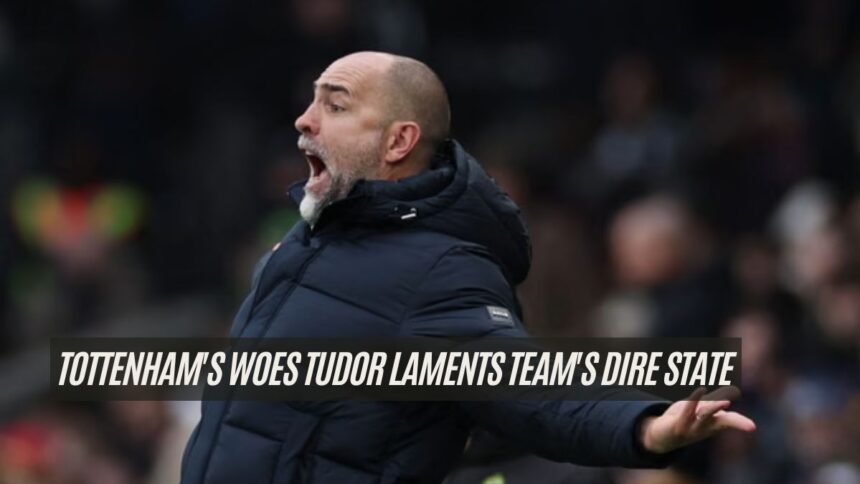
The air around Tottenham Hotspur is thick with despair, a sentiment powerfully articulated by interim manager Igor Tudor following yet another disheartening defeat. Their 2-1 loss to Fulham marked a fourth consecutive league defeat, plunging the North London club into a perilous position just four points above the dreaded relegation zone. Tudor, visibly deflated, described the situation as nothing short of “amazing,” a term laden with irony given the club’s current predicament. He pinpointed what he believes are the three fundamental pillars of Tottenham’s collapse its attack, its midfield, and its defence.
The Astonishing Decline and Tudor’s Stark Assessment
Igor Tudor’s assessment of Tottenham’s current plight was unflinchingly direct. “I cannot tell you anything new,” he stated, a clear indication of the repetitive nature of the club’s struggles. His plea to the players was simple yet profound, calling for more personality and a proactive desire to perform rather than merely react. Tottenham’s deficiencies, as Tudor meticulously outlined, are comprehensive. The team lacks the quality and conviction to score goals in attack. In midfield, there is a clear absence of the necessary running and dynamism. And at the back, the ability to “stay there to suffer and not concede the goal” has evaporated, leaving them vulnerable to every opponent’s advance. This holistic failure, Tudor reiterated, makes their situation truly “amazing” in its scope.
Beyond Systems A Question of Brain and Will
Deflecting any blame from his chosen 4-4-2 formation, Tudor insisted that the tactical setup was not the root cause of their problems. “It’s not about systems at the moment,” he declared, shifting the focus squarely onto the players’ mental approach and decision-making. His most damning indictment was an accusation of lacking “brain,” suggesting that opponents consistently outthink and outmanoeuvre his side. “They arrive before us. They predict and we are always late on everything. That’s the problem,” Tudor explained, painting a picture of a team constantly a step behind the play. This stark analysis contrasted sharply with his somewhat more bullish tone after the recent 4-1 home defeat to Arsenal, highlighting the deepening sense of crisis within the club.
Controversial Call The Fulham Opener
The early concession of a goal against Fulham undoubtedly compounded Tottenham’s woes and contributed to Tudor’s frustration. Harry Wilson’s volley, which opened the scoring after just seven minutes, came after Raúl Jiménez appeared to push Radu Dragusin. This contact, strikingly similar to an incident last week involving Randal Kolo Muani where a goal was disallowed, sparked outrage from the Tottenham camp. Tudor admitted he was too upset to confront referee Thomas Bramall about the decision, describing it as “so obvious.” He argued that even a small push, without touching the ball, constitutes an unfair advantage and should be penalised. For Tudor, the failure to award a foul was “ridiculous” given the significant consequence of a goal, suggesting that the attacking player had gained an advantage by not focusing on the football but on how to “cheat.”
Fulham’s Triumph and Tactical Acumen
In stark contrast to Tottenham’s gloom, Marco Silva expressed understandable delight with Fulham’s victory. The win propelled Fulham into the top half of the table, a testament to their growing confidence and tactical prowess. Silva was particularly pleased with the amount of chances his team created, believing the 2-1 scoreline did not fully reflect their superiority on the day. He singled out centre-back Issa Diop for special praise. Diop, a late call-up after Joachim Andersen was ruled out due to illness, delivered a stellar performance despite being at home just the night before. Silva lauded him as a “top professional,” highlighting the depth and commitment within the Fulham squad.
A Club’s Deep-Seated Problems
Tudor’s comments suggest that Tottenham’s issues extend far beyond mere attitude or commitment. He alluded to “big problems” at the club, hinting at systemic failures that permeate the entire organisation. The team’s fragility, exemplified by conceding an early goal following a contentious decision, seems to be a symptom of a deeper malaise. As Tottenham grapples with this alarming slide towards the relegation zone, the need for introspection and decisive action becomes increasingly urgent. The interim manager’s despairing words serve as a stark warning, indicating that fundamental changes are required to halt this alarming trajectory.
Tottenham finds itself at a critical juncture, with interim manager Igor Tudor’s stark words laying bare the club’s multifaceted struggles. The consecutive defeats and the team’s alarming proximity to the relegation zone demand immediate attention and a profound shift in approach. Tudor’s assertion that the problems lie in attack, midfield, and defence, coupled with a perceived lack of mental sharpness, paints a grim picture. The road ahead for Tottenham is fraught with challenges, requiring not just a change in fortune, but a fundamental re-evaluation of its identity and purpose to escape the shadow of relegation.