





When the cameras were switched on for the official World Cup portrait sessions, every player and coach was required to step in front of the backdrop. Some embraced the moment, others appeared uncomfortable, while several used the opportunity to showcase their personalities to a global audience.
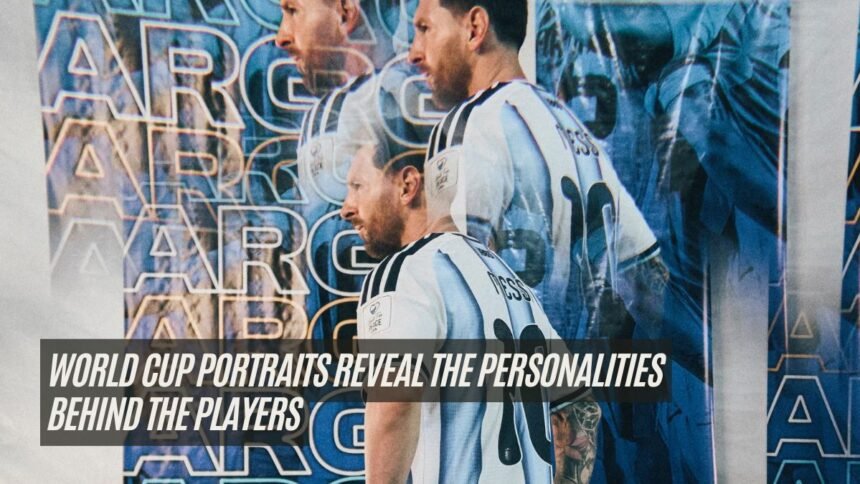
Argentina captain Lionel Messi stood firmly in front of the lens with a stern expression. Spain defender Marc Cucurella brought energy and movement to his session, while Belgium’s Diego Moreira produced one of the tournament’s most striking poses by partially hiding his face behind his arm and exposing an unsettling tattoo. England skipper Harry Kane, meanwhile, adopted an awkward kneeling stance that later attracted widespread attention.
Across the tournament, 1,248 players and 48 managers participated in these mandatory photography sessions. Whether naturally confident in front of the camera or visibly reluctant, none could avoid the official portrait process.
A Global Production Behind the Images
Getty Images photographers carried out the sessions for FIFA over several weeks. The resulting portraits delivered much more than identification photographs, offering glimpses into how players wanted to present themselves and how they viewed their own public image.
Behind-the-scenes photographs later released by Getty provided additional context. Away from the final images, players were seen chatting, reviewing photographs, joking with teammates, and waiting for their turn.
Some portraits immediately stood out. Moreira’s dark and mysterious composition contrasted sharply with Cucurella’s playful energy. Uruguay defender Ronald Araújo incorporated his well-known goal celebration by covering part of his face, while stars such as Erling Haaland, Kylian Mbappé, and Lamine Yamal featured in specially designed composite images.
How the Sessions Were Organised
Each national team was assigned two photographers, allowing the production crews to prepare separate shooting environments simultaneously. One set remained straightforward and traditional, while another allowed for more artistic experimentation.
This arrangement ensured that players and coaches could move efficiently through the process, which was essential given the large number of participants.
Lighting setups remained relatively uncomplicated. Large studio lights equipped with softboxes illuminated the subjects from the front, while additional rim lighting behind the players helped define outlines and add depth to the photographs.
Although the backgrounds appeared more restrained than those used during the 2022 World Cup portrait sessions, photographers introduced creativity through specialist lens filters. These techniques produced unusual visual effects, including soft blurring, doubled images, and kaleidoscopic patterns. One of the most memorable examples involved Messi, whose portrait gained an almost dreamlike appearance.
Brazil’s Stars Enjoy the Experience
Brazil’s session offered some of the tournament’s most expressive moments.
Danilo waited beside the set while goalkeeper Alisson posed under the studio lights. Neymar embraced the cameras with his usual confidence, producing several highly animated images. One portrait captured the forward displaying considerable emotion, while teammates including Bruno Guimarães reviewed photographs directly on the camera screens.
Elsewhere, Neymar, Marquinhos and Douglas Santos spent time waiting on the sidelines between shots. Marquinhos also delivered one of Brazil’s strongest images, with photographers capturing a particularly emotional and intense expression.
The Challenge Facing Football Photographers
The Guardian photographer Tom Jenkins explained that working with elite footballers can be demanding even under normal circumstances. During a World Cup production line involving dozens of players, the pressure increases significantly.
According to Jenkins, photographers often receive only a few minutes with each player. During that limited window they must create several different images while quickly adapting to the personality standing in front of them.
Traditional portraits remain necessary, resembling classic school photographs that have long been associated with football media guides. However, modern expectations have changed considerably, with teams and photographers now seeking images that feel more emotional, expressive, and entertaining.
Many players arrive with prepared celebrations or signature poses. Nevertheless, photographers also need alternative ideas ready in case a player appears uncertain or unwilling to experiment.
Jenkins noted that photographers temporarily take complete control of some of the sport’s biggest stars. Because of that responsibility, every technical detail must be tested beforehand so that the focus can remain entirely on the individual once they enter the studio.
Messi and the Importance of Image
Messi’s official portrait showed a serious and controlled side of the Argentine captain, although behind-the-scenes photographs revealed a much warmer and more relaxed personality.
Production teams prepared identification cards for every player, including Messi himself, to assist editors during post-production work. Even the sport’s most recognizable figure was not exempt from the organizational process.
Players frequently inspected their photographs immediately after they were taken, ensuring they were satisfied with the final results.
Jenkins believes modern footballers are highly conscious of their personal brands. Social media platforms, particularly Instagram, have made image management increasingly important for elite athletes.
He also pointed out that many players already possess extensive experience from commercial campaigns. Eberechi Eze has worked with Burberry, while Declan Rice previously appeared in advertisements for L’Oréal. Because of these opportunities, numerous players now feel comfortable in front of cameras and often enjoy the attention.
England’s Mixed Reception
Not every portrait received positive reactions.
Several England players became targets of social media criticism following the release of their official photographs. Declan Rice was mocked because of his sunburned appearance, while Anthony Gordon attracted jokes comparing him to Princess Diana. Goalkeeper Dean Henderson also generated attention because of an uncomfortable sideways glance.
Harry Kane’s kneeling pose was widely discussed, and Reece James became the subject of jokes suggesting he resembled a child showing a new football kit to a family member.
Despite those reactions, some of England’s more experimental images demonstrated the creative possibilities available to photographers. Jude Bellingham’s portrait, which used special filters to create a blurred double image, illustrated how artistic techniques could enhance even relatively simple poses.
Bielsa Produces the Defining Portrait
Surprisingly, the most discussed portrait from the entire project did not belong to a player.
Uruguay head coach Marcelo Bielsa generated significant attention after photographer Michael Regan captured him at the team’s training base in Cancún, Mexico.
Rather than looking directly at the camera, Bielsa stared down toward his feet. The result perfectly reflected the Argentine manager’s unconventional personality and apparent discomfort with the process.
Later, Bielsa dismissed the experience by saying, “I’m not a model.”
For Jenkins, the photograph succeeded precisely because it remained true to the individual. In his view, the strongest portraits are those that genuinely reflect personality, and Bielsa’s image accomplished that perfectly.
At a tournament dominated by elite talent and global superstars, the official portrait sessions offered something different: a brief moment when footballers and managers revealed who they are away from the pitch.