






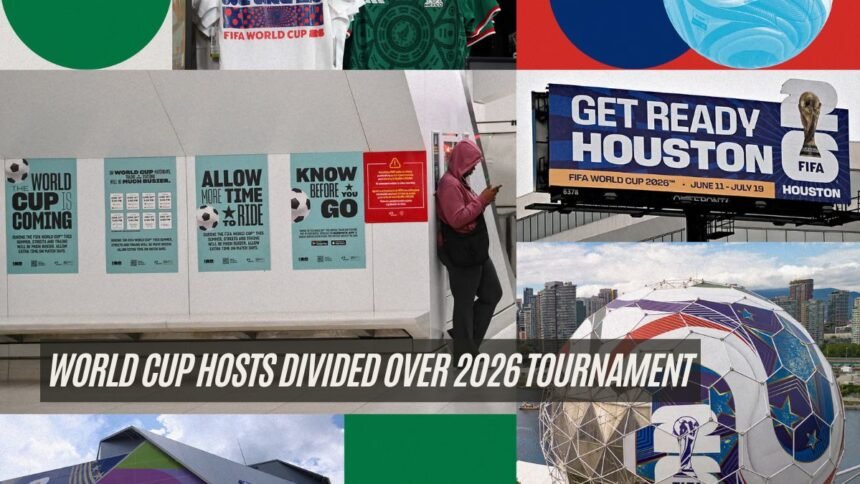
With the 2026 World Cup set to span 104 matches across 16 venues in Canada, Mexico, and the United States, anticipation should be reaching fever pitch. Instead, conversations among supporters in host cities reveal a more complicated picture.
While many are proud to welcome football’s biggest event, concerns over soaring ticket costs, FIFA’s decision-making, political tensions, and inadequate infrastructure planning have dampened excitement in several locations.
From Atlanta to Vancouver, supporters remain passionate about the sport itself. Yet many feel increasingly disconnected from a tournament they believe is becoming inaccessible to ordinary fans.
Atlanta Struggles to Feel the Magic
For some supporters in Atlanta, memories of the 1994 World Cup remain far more inspiring than the current edition.
One fan noted that attending even a group-stage fixture with a spouse and two children could cost roughly $2,000, making live attendance unrealistic. Knockout matches would require an even greater financial commitment.
That reality has created a sense of detachment. The supporter recalled how the 1994 tournament shaped his love for football as a teenager and expressed disappointment that his children may never experience a similar atmosphere.
Interest in Atlanta appears limited. Dedicated football followers are discouraged by ticket costs, while many casual observers barely discuss the tournament at all. Media coverage has largely focused on pricing controversies rather than excitement surrounding the matches.
There is also skepticism regarding FIFA’s expanded format. Some fear the additional games could dilute interest during the early stages, leaving stadiums less than full until the competition reaches the knockout rounds. Expectations for the United States national team are similarly modest, with many predicting an early exit once stronger opponents emerge.
Boston Balances Nostalgia With Doubt
In Boston, enthusiasm has been tempered by broader global and domestic concerns.
One long-time supporter fondly remembers attending every World Cup match held in Foxborough during 1994, including Argentina’s clash with Nigeria and the quarter-final between Italy and Spain. At the time, experiencing a World Cup firsthand felt like a once-in-a-lifetime achievement.
Three decades later, the excitement is noticeably more restrained. Although he expects to become absorbed once the tournament begins, he admits feeling more cynical than he did during the previous US-hosted World Cup.
Ticket prices and the complicated purchasing process have discouraged him from attending matches. Around the city, he has not yet sensed widespread excitement, though that could change as kickoff approaches.
Logistical concerns remain another major issue. Transportation to Foxborough has long been challenging, and despite plans to increase rail services, many fear the infrastructure will struggle to handle demand. Recent negotiations involving local authorities, the stadium, and FIFA only added to concerns that transportation and parking could become problematic.
Still, optimism remains that quality football, memorable performances, and emerging stars will ultimately overshadow the frustrations.
Dallas Fans Feel Priced Out
In Dallas, anticipation faded quickly once ticket information became available.
One supporter said he had eagerly awaited the opportunity to attend matches but was ultimately priced out of what he expected to be a historic local event. Despite his continued passion for football and plans to follow the entire tournament, attending games now seems unrealistic.
The city itself has yet to fully embrace the occasion. Promotional activity has been limited, and there are few visible reminders that Dallas will host World Cup fixtures.
Weather conditions are another concern. With temperatures expected to exceed 35°C during parts of the tournament, some believe the region may be less attractive to visiting teams and supporters.
Rather than focusing on football alone, many are hoping the competition proceeds without major political distractions or security incidents. While there is hope that the US national team can reach the quarter-finals, expectations remain cautious.
Mexican Cities Question Their Role
Guadalajara
In Guadalajara, frustration is particularly evident.
Many residents feel ticket prices are completely disconnected from local incomes. With average monthly earnings significantly lower than the cost of attending matches, large portions of the population have effectively been excluded.
Political tensions have further complicated perceptions of the tournament. Some supporters believe the United States has become the dominant force behind the event, leaving Mexico in a secondary role despite its deep football culture and previous success as a host nation.
Although confidence remains that local hospitality will shine during the tournament, enthusiasm has been weakened by concerns over politics, FIFA’s leadership, and accessibility.
Mexico City
The mood in Mexico City is similarly mixed.
Some residents opposed Mexico joining the North American hosting bid from the beginning, arguing that the arrangement disproportionately favors the United States. Hosting only 13 matches out of 104 has left many feeling their football-loving nation has been undervalued.
Ticket prices have become a major source of resentment. Many fans believe ordinary Mexicans have been excluded from participation, leaving stadium attendance increasingly dependent on wealthier spectators.
There is also disappointment over missed infrastructure opportunities. Residents living near the famous stadium hoped the World Cup would accelerate major transportation improvements, including better subway connections. Instead, many feel authorities settled for temporary solutions that offer little lasting benefit after the tournament concludes.
For some locals, the event has become more of a disruption than a transformative opportunity.
Monterrey
In Monterrey, excitement still exists but is accompanied by concerns about affordability.
Many residents believe FIFA has transformed the tournament into a luxury product. Even purchasing official merchandise can be difficult for average households.
Nonetheless, supporters expect public gatherings and community viewing areas to help preserve the traditional World Cup atmosphere. There is hope that Mexico’s national team can perform respectably while the tournament provides at least some economic benefits to the city.
Houston Sees Potential and Problems
Houston residents are looking forward to hosting seven World Cup matches, but enthusiasm has been diminished by several factors.
Ticket prices have become a major talking point. Even less glamorous fixtures carry price tags many consider excessive.
One lifelong England supporter admitted he may eventually pay inflated resale prices simply because opportunities to watch England in Texas during a World Cup are exceedingly rare.
Although football has grown dramatically in Houston over the past two decades, the city remains heavily attached to American football, baseball, and basketball. As a result, excitement has not reached the levels some expected.
There are also concerns that Houston’s infrastructure could struggle under the weight of increased tourism, leading to significant traffic congestion throughout the tournament.
Kansas City Wants to Impress the World
Kansas City approaches the World Cup with a combination of pride and caution.
Residents are excited that the city will serve as a base for multiple national teams, including England, Argentina, the Netherlands, and Algeria. However, worries about global politics, public safety, and national tensions continue to linger.
Some locals fear international visitors may be surprised by the city’s dependence on cars and limited public transportation options. Concerns about gun violence have also surfaced, particularly given recent incidents that attracted national attention.
Despite those worries, there is widespread determination to showcase Kansas City in a positive light. Local businesses expect an economic boost, and many residents hope visitors leave with a far more favorable impression than they anticipated.
Los Angeles Questions Accessibility
Supporters in Los Angeles are excited to host football’s biggest event but increasingly concerned that ordinary fans are being pushed aside.
One fan who attended previous World Cups recalled paying between $100 and $200 for tickets in South Africa and Brazil. Seeing group-stage prices exceed $600 this time has left him frustrated.
For families, attending matches has become especially challenging. Combined with parking expenses and limited public transportation options, the overall cost can quickly become prohibitive.
Many hope the tournament still inspires younger generations and allows international visitors to enjoy a positive experience despite broader political tensions.
East Coast Cities Await a Spark
Miami
Excitement exists in Miami, but relatively few people appear prepared to attend matches due to the financial burden involved.
Many supporters are instead planning to experience the tournament through fan festivals and public viewing areas. At present, local awareness remains lower than expected for an event of this scale.
New York and New Jersey
In the New York metropolitan area, some believe the World Cup could struggle to capture widespread attention.
The region’s relentless pace means even major sporting spectacles often compete with countless other attractions. For many residents, the tournament may simply blend into the city’s daily rhythm despite the area hosting the final.
Even so, supporters hope the event provides an opportunity for people from different backgrounds to come together and celebrate.
Philadelphia
Philadelphia’s enthusiasm has steadily declined as ticket prices, political debates, and dissatisfaction with FIFA have taken center stage.
Although promotional materials are visible throughout the city, conversations about the tournament remain surprisingly rare. Many football fans find themselves torn between enjoying the matches and feeling frustrated by what they perceive as the commercialization of the sport.
San Francisco Fans Feel Excluded
Among all the host cities, few complaints are as emotionally charged as those coming from San Francisco.
Local supporters envisioned a vibrant international celebration filled with fan zones, cultural exchanges, and affordable access to matches. Instead, many now feel excluded from the event taking place in their own region.
Ticket prices have become the central issue. Some fans cannot justify paying hundreds of dollars for distant seats during group-stage games.
There is also frustration that organizers appear focused on sponsors and corporate guests rather than creating an authentic football atmosphere. Many fear the region will miss the unique energy that traditionally defines a World Cup host city.
For lifelong football supporters, the feeling is particularly painful because the tournament is close enough to touch yet remains financially out of reach.
Seattle and Toronto Embrace the Occasion
Not every host city is struggling to generate excitement.
Seattle has largely welcomed the World Cup with enthusiasm. The city’s long-standing football culture, driven in part by decades of support for the Sounders, has helped create a positive atmosphere. Residents are eager to participate in fan activities and meet visitors from around the globe.
Toronto is equally optimistic. As one of the world’s most multicultural cities, it already experiences international football rivalries every World Cup. Residents expect neighborhoods, bars, and public spaces to come alive as supporters from countless nations celebrate together.
For many Torontonians, the tournament feels perfectly suited to the city’s identity.
Vancouver Remains Skeptical
In Vancouver, enthusiasm has been muted.
Some residents are discouraged by FIFA’s reputation, the expanded size of the competition, and the financial burden placed on host cities. Ticket prices have also prevented many from considering attendance.
Most local interest appears focused on public viewing events rather than stadium visits. At the same time, concerns about transportation disruptions and traffic remain common topics of discussion.
There are also worries about security, particularly in the United States, where some Canadian observers fear broader social tensions could impact the tournament experience.
A Tournament Caught Between Passion and Frustration
Across North America, one theme repeatedly emerges: supporters still love the World Cup.
They remain eager to welcome visitors, celebrate football, and create unforgettable memories. Yet many also believe the competition has drifted away from the people who helped make it the world’s most beloved sporting event.
From Atlanta to Mexico City and Vancouver to Miami, fans are united by a common complaint. The game itself still inspires them, but soaring prices, political controversy, and missed opportunities have left many wondering whether the 2026 World Cup truly belongs to ordinary supporters anymore.