






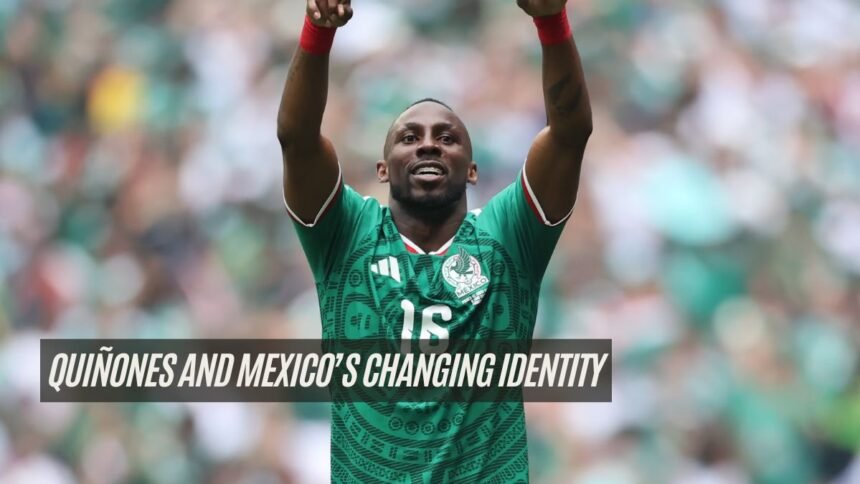
In March 2024, a match in Guadalajara offered another disturbing example of racism inside Mexican football. During a victory for Club América in El Clásico Nacional, Julián Quiñones found the net and moved toward the touchline to celebrate. From the stands came racist abuse directed at the Black forward, including slurs and monkey chants.
For followers of Mexican football, the incident felt painfully familiar. Videos recorded by supporters quickly circulated online, television programs debated the episode, and football authorities issued condemnations while promising investigations.
As often happens, however, the outrage faded quickly. Attention shifted toward transfer speculation, controversial refereeing decisions and the next round of fixtures. A few months later, Quiñones completed a move to Al-Qadsiah in Saudi Arabia, where he eventually became the league’s leading scorer. The episode in Guadalajara appeared destined to disappear among football’s endless cycle of stories.
That assumption would not last long.
A Hero on Home Soil
Less than two years later, the same player became the face of national celebration.
On 11 June, Quiñones scored Mexico’s opening goal at the 2026 World Cup, helping the host nation begin its campaign with victory in a tournament staged on home soil for the first time in forty years.
The reaction could not have been more different from the hostility he had previously experienced. Supporters inside the stadium erupted, commentators repeatedly shouted his name, and social media was flooded with images of the striker wrapped in the Mexican flag.
The same football culture that had once subjected him to racist abuse now embraced him as a national icon.
Return to Guadalajara
Ahead of Mexico’s second group-stage match against South Korea, Quiñones returned to Guadalajara, the city where the racist chants had echoed in 2024.
Large crowds gathered outside the national team’s hotel, many dressed in Mexico shirts and oversized sombreros. When the striker appeared, supporters began chanting: “Quiñones, hermano, ya eres Mexicano.”
The phrase, meaning “Quiñones, brother, now you are Mexican,” represented affection and acceptance. Yet it also revealed a certain hesitation. Such chants are often directed toward foreigners who develop a special connection with Mexico, rather than individuals who already hold Mexican citizenship.
The contrast between rejection and celebration within such a short period reflects a larger conversation taking place throughout modern Mexico regarding nationality, race and belonging.
Questioning the Image of a Mexican
Karma Frierson, a scholar of Black studies at the University of Rochester who has researched Black identity in Mexico, believes the reaction to Quiñones’ success reveals persistent assumptions about what Mexicans are expected to look like.
According to Frierson, many people expressed surprise not only because Quiñones scored an important World Cup goal, but because a Black player had become one of the country’s leading football figures.
She argues that this reaction exposes an enduring disconnect. Although supporters understand that a player wearing the national jersey represents Mexico, many still struggle to reconcile that identity with appearances that fall outside traditional stereotypes.
Quiñones was born in Colombia and moved to Mexico in 2015. After establishing himself in Liga MX, he obtained Mexican citizenship in 2023 and received his first national team call-up later that year.
His emergence has reopened a sensitive issue that Mexico has often avoided: who can legitimately be considered Mexican?
Football Beyond the Border
The answer increasingly extends beyond Mexico itself.
Throughout much of the twentieth century, the national team largely consisted of players developed entirely within the country. Modern football, however, has transformed those boundaries.
Migration, family connections and dual nationality have expanded the talent pool far beyond Mexican territory. Today, states such as California and Texas may prove as important to Mexican football recruitment as regions within Mexico itself.
Several promising young players have emerged in the United States from Mexican mothers and African American fathers. California-born Antonio Leone and Da’vian Kimbrough have both represented Mexico at youth level.
Other examples have already appeared in the senior side. Brothers Giovani and Jonathan dos Santos, sons of Brazilian footballer Zizinho and a Mexican mother, enjoyed long international careers. Melvin Brown, whose family heritage included Jamaican ancestry through his grandfather, represented Mexico at the 2002 World Cup.
None of these players align neatly with the conventional image often associated with Mexican identity.
The Legacy of Mestizaje
Frierson argues that conversations about race have historically remained limited within Mexican society.
One reason lies in the concept of mestizaje, the belief that modern Mexico emerged from the blending of Indigenous and European populations. Following the Mexican Revolution, this idea became central to national identity.
Rather than emphasizing differences between communities, the ideology promoted the idea of a unified people created through mixture.
Similar ideas developed elsewhere in Latin America and often contrasted with the racial divisions seen in the United States. While the US openly confronted segregation and racial classifications, many Latin American nations embraced the notion that racial distinctions had largely disappeared through mixing.
Although appealing in theory, reality proved far more complicated.
Racism in Mexican Football
Incidents involving racial discrimination have continued to surface in both football and media.
During the 2010 World Cup in South Africa, broadcaster Televisa aired characters wearing blackface makeup, afro wigs and stereotypical costumes. Years later, in 2018, TV Azteca reporter Carlos Guerrero appeared in blackface during coverage of a Liga MX match.
While both cases generated criticism, many dismissed them as harmless humor.
Football players have also reported racist abuse. Colombian striker Darwin Quintero and Panamanian defender Felipe Baloy both spoke publicly about insults directed at them during Liga MX matches.
In 2021, Santos Laguna defender Félix Torres left the field in tears after alleging racist remarks from Germán Berterame, then playing for Atlético de San Luis. Investigations followed, but officials said they could not verify the accusations, resulting in no disciplinary measures.
Quiñones himself largely minimized the abuse he experienced in Guadalajara. In a statement posted on Instagram, he condemned the online harassment directed at his daughters and emphasized that insults concerning his skin color had become common throughout his career.
He stated that he possessed the mental strength to deal with such attacks, though he urged critics to leave his family out of the abuse.
A Changing Perspective
Frierson believes that Quiñones’ performances during a World Cup hosted in Mexico could encourage broader discussions about race and representation.
At the same time, Mexican players who spend time in the United States are returning with different perspectives.
Jonathan dos Santos, while playing for LA Galaxy in 2020, said he appreciated the environment in the United States because he experienced fewer racist insults there. He noted that he had also encountered discrimination during his time in Spain with Barcelona and Villarreal.
According to Dos Santos, several countries could learn from the way American sports culture treats athletes with respect.
Rediscovering Afro-Mexican History
Greater visibility within football may also encourage Mexico to examine its own historical roots.
During the colonial period, hundreds of thousands of enslaved Africans arrived in New Spain. Their descendants established communities across various regions, particularly Veracruz and the Costa Chica areas of Guerrero and Oaxaca.
Afro-Mexicans contributed to the development of the nation from its earliest years. Heroes of independence such as Vicente Guerrero and José María Morelos possessed Afro-Mexican ancestry, although this aspect of their heritage often receives limited attention.
Frierson argues that Black identity has always been part of Mexico’s national fabric.
Viewed through this lens, the increasing diversity of Mexican football is not creating something entirely new. Instead, it is revealing realities that have existed for centuries.
The National Team Reflects a New Mexico
Football frequently acts as a mirror for society.
A national team represents more than tactics and results; it embodies ideas about citizenship, belonging and identity. The World Cup remains one of the few global events where nations present themselves to the world through their players.
Modern Mexico is undergoing significant demographic changes. Migrants from Haiti, Cuba and South America have settled in the country in growing numbers. Digital workers from Europe and the United States have established businesses in Mexico City, while some Mexicans who spent decades abroad have returned with their families.
The national team increasingly reflects this diversity.
Mexico’s World Cup squad includes Spain-born Álvaro Fidalgo, Alaska-born Obed Vargas, Argentina-born Santiago Giménez and Colombian-born Quiñones.
Each player represents a different story, yet all wear the same jersey.
More Than a Goal
Quiñones challenges long-standing assumptions about what a Mexican should look like.
The country’s diversity has always existed, but football possesses a unique ability to make those realities visible. A goal is scored, cameras search the crowd, and millions watch the face of the player who delivered the moment.
For a brief instant, an entire nation looks at itself.
Perhaps not as it once imagined itself, but as it has always been.