





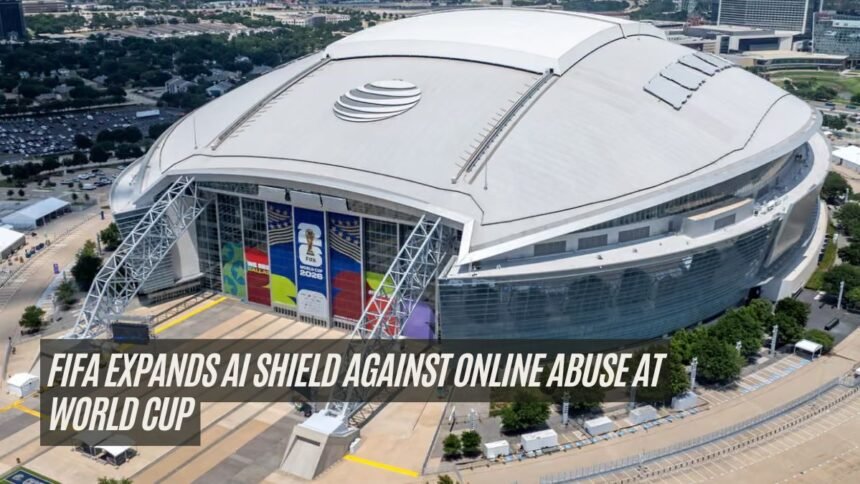
FIFA is preparing to widen the use of artificial intelligence during the 2026 World Cup as part of a broader effort to limit the volume of abusive content directed at players and national teams online.
The global governing body of football first launched its social media protection initiative following the 2022 tournament in Qatar. For the upcoming competition, which begins next Thursday, FIFA has made the moderation service available free of charge to every participating football association. At the time of writing, the Football Association has yet to indicate whether it will adopt the system.
The move reflects growing concerns across the sport regarding the impact of online abuse, particularly as players continue to face racist, homophobic, sexist, and other harmful messages after matches.
Premier League Clubs Increasingly Turn to AI Solutions
Across English football, more clubs have begun embracing AI-powered moderation tools to shield players from toxic interactions on social media.
Among those organizations is Tottenham Hotspur, which publicly denounced the racist abuse directed at defender Kevin Danso after an error against Brighton last season. The club is one of several teams using technology designed to prevent offensive content from reaching players’ feeds.
The system scans comments using a database of approximately 30,000 abusive keywords and phrases. Offensive messages can be detected and hidden in less than two seconds. Importantly, users who post such comments remain unaware that their messages have been concealed and flagged for review. Although the sender can still view the content, it is removed from public visibility and may trigger further investigation.
Those found responsible for abusive behavior could face sanctions, including restrictions on purchasing tickets for FIFA competitions or club matches.
Currently, the technology operates across Facebook, Instagram, YouTube, TikTok, and Threads. However, it does not function on X, formerly known as Twitter, because the platform has historically allowed hidden comments to remain accessible.
Arsenal and Spurs Partner With Respondology
Tottenham and fellow north London club Arsenal have both collaborated with AI moderation company Respondology. The platform also supports the Premier League’s No Room For Racism initiative and works to reduce harmful content across club-owned digital channels.
The company was founded after tennis star Serena Williams became the target of widespread racist and sexist abuse following a Facebook post featuring her newborn child during the 2019 US Open.
Respondology’s client list has since expanded well beyond football, including organizations from the NFL, Nascar, and major commercial brands such as Boots and Marks & Spencer.
Its involvement in football accelerated after England players Bukayo Saka, Marcus Rashford, and Jadon Sancho suffered racist abuse online following their missed penalties in the Euro 2020 final.
Billions of Harmful Impressions Removed
According to Respondology co-founder and chief executive Erik Swain, the scale of abuse being filtered from football-related channels is enormous.
Swain estimates the company has prevented roughly 1.5 billion hateful impressions worldwide, although he believes the true figure could be even higher. He said approximately 15 million racist and homophobic comments have already been removed from football platforms, with Premier League environments accounting for a significant portion of that total.
He noted that even conservative calculations demonstrate the scale of the problem. A single abusive post can be viewed repeatedly, meaning millions of harmful comments can quickly translate into billions of exposures across clubs and athletes with massive online followings.
Technology Designed for Every Language
One of the major strengths highlighted by Swain is the system’s ability to recognize abusive content across virtually all languages and communication styles.
He explained that the AI can interpret cultural context, linguistic nuances, and even unconventional forms of communication. During testing, the technology successfully handled formats as unusual as Morse code and Klingon.
Swain believes the upcoming World Cup could generate significantly more online hostility than previous tournaments, particularly because matches will be played in the United States. Despite that challenge, he expressed confidence that the platform is capable of managing much larger volumes of harmful content.
For him, the technology represents a practical tool that can be used to improve the online environment surrounding the sport.
Clubs Establish Clear Digital Boundaries
Manchester United introduced a formal social media code of conduct in 2024, reflecting a broader trend among clubs seeking stronger oversight of online spaces.
Swain expects similar measures to become standard throughout the Premier League within the next one to two years.
He pointed to Arsenal’s approach as an example. Supporters remain free to criticize tactics, performances, coaches, or players, but the club draws a firm line when comments become discriminatory or abusive.
According to Swain, the principle mirrors what already happens inside a stadium. Fans engaging in racist behavior at the Emirates Stadium would face removal, and clubs increasingly want equivalent standards applied to their digital communities.
Why Social Platforms Have Not Taken the Lead
Despite the availability of moderation technology, major social media companies have generally avoided implementing comparable systems themselves.
Swain argues this stems from a philosophical position adopted by many platforms. In his view, companies such as Meta and X see themselves primarily as technology platforms rather than publishers responsible for user-generated content.
Instead of directly policing conversations, these firms provide third-party application programming interfaces (APIs) that allow outside companies to connect moderation tools and manage harmful content independently.
Mental Health Concerns Grow Ahead of 2026 Tournament
The challenge could become even greater during the 2026 World Cup.
With 78 matches scheduled in the United States and sports betting now legal across most American states, expectations are that online criticism and abuse aimed at players will increase substantially.
Swain emphasized that the issue extends beyond reputation management and directly affects athlete wellbeing. He referenced the treatment received by Saka, Rashford, and Sancho after Euro 2020 as a stark reminder of the psychological consequences associated with online harassment.
He believes moderation technology can help players focus on performances without worrying about hostile reactions waiting for them online after every mistake.
Many athletes, he said, routinely check social media shortly after matches to gauge public reaction. While some players may not feel they need additional protection, others welcome tools that reduce exposure to toxic content and help preserve their mental health.
For clubs, protecting players has become a priority both on and off the pitch. Swain concluded that the technology already exists to dramatically reduce the problem, making wider adoption a logical next step for football.