





Some moments in football refuse to fade quickly. The emotions linger, and many supporters would not want them to disappear even if they could. The smell of flares, the endless flood of celebrations across social media, and the overwhelming sense of happiness are all part of memories that deserve to last.
When the final whistle sounded in Arsenal’s title-clinching season, confirmed after Manchester City’s 1-1 draw away at Bournemouth, emotions overflowed. Tears arrived immediately. Plans were made without hesitation. A quick change of clothes, a reminder for a child to get ready, and the journey to the Emirates Stadium began.
The celebrations did not end there. The following day brought another visit, this time with champagne and a chance to experience the club’s emotional lap of appreciation. It also offered an opportunity to reconnect with Arsenal’s history by returning to Highbury, sitting beside the famous marble halls and reflecting on a journey that had finally come full circle.
A Long Wait Finally Ends
The last time Arsenal were crowned champions of England, many supporters were living very different lives. Seventeen years old then, now approaching forty, married and raising a child, one fan’s story mirrors that of countless others who waited years for this moment.
Life changes dramatically over two decades, but football’s ability to create powerful emotions remains remarkably constant. The game can bring devastation one week and euphoria the next. For those who have never experienced that attachment, such feelings may seem difficult to understand. Yet for devoted supporters, they are tangible and deeply personal.
Football leaves marks. Sometimes those marks are painful. Sometimes they become treasured memories. Either way, the emotional impact is impossible to deny.
The Game That Accompanies Life
For many supporters, football exists alongside life’s biggest moments. It becomes part of personal history, offering both escape and comfort during difficult periods.
There are stories of fans who found brief relief through Arsenal matches while spending anxious days in hospitals as newborn children fought for survival. Others hoped elderly family members might witness one final league title before it was too late. Some supporters even visited cemeteries to place club scarves on the graves of loved ones who never stopped believing.
The game is rarely just about results. Instead, it becomes woven into family memories, personal struggles, and milestones that define entire lives.
Why Sport Creates Unique Joy
Reflecting on what truly brings happiness often leads to one conclusion: very few experiences can rival the emotional highs delivered by sport.
Football creates a sense of belonging that resembles religion without requiring faith. It can feel similar to being part of a vast political movement, yet without the ideological divisions. What separates it from almost everything else is its unpredictability and its ability to remain relevant across generations.
Family, creativity, art, writing, and countless other passions provide satisfaction and meaning. Yet football possesses a unique capacity to produce extreme emotional reactions. It can break hearts and lift spirits within minutes. It can make grown adults cry openly from either despair or joy in ways few other environments permit.
A City United in Celebration
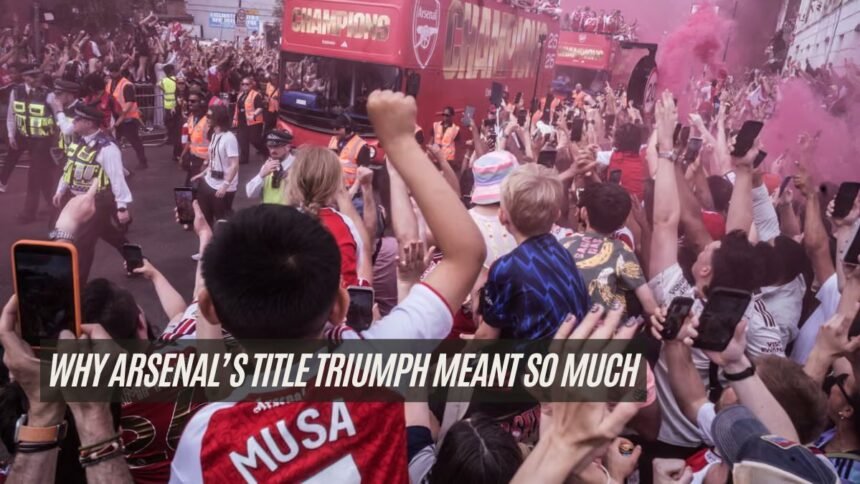
Walking through the streets of Hackney and Islington during the title celebrations revealed something increasingly rare. Crowds stretched through side roads and avenues, moving slowly through north London as if the entire area had become part of one giant gathering.
Among the sea of supporters were people who happened to find themselves caught in the celebrations without truly being part of them. Looking at those individuals sparked a feeling that perhaps they were missing an experience they did not even realise existed.
A few days before Arsenal secured the championship, revisiting the film Fever Pitch highlighted a familiar theme. In the story, a character initially resistant to football gradually begins to understand its appeal. The turning point comes when she witnesses thousands of supporters celebrating together after a dramatic title victory.
The scenes felt remarkably similar to the spontaneous celebrations that erupted when Arsenal’s success became official. The atmosphere was electric. Fans embraced strangers. Children were lifted above the crowd as though they were trophies themselves. Every shared moment reflected a collective joy that extended far beyond football.
Connection in a Divided Age
The celebrations following the final league fixture against Crystal Palace and the subsequent parade offered something modern society often struggles to provide: genuine human connection.
For those gathered in north London, social differences became irrelevant. People stood shoulder to shoulder regardless of background, age, profession, or personal beliefs. They shared one feeling and one purpose.
Few modern experiences can unite large groups of people so completely. For a brief period, nothing else seemed important. The sense of community was powerful, cutting through the individualism that increasingly characterises contemporary life.
The Complex Reality of Supporting a Club
Despite the joy surrounding Arsenal’s success, the club is far from beyond criticism.
Owner Stan Kroenke has seen his public image improve among many supporters, particularly after recent achievements. However, his wealth was built through real estate and family connections to the Walton dynasty behind Walmart, making him far from a straightforward alternative to the state-backed ownership models seen elsewhere in football.
Questions have also been raised regarding commercial partnerships with Emirates, Visit Rwanda, and Deel. Meanwhile, the decision to continue selecting former midfielder Thomas Partey while a police investigation into rape allegations was ongoing generated significant criticism. Partey denied the allegations.
These subjects remain important and deserve ongoing discussion, scrutiny, and, where appropriate, protest.
Why the Bond Endures
Given those controversies, some may wonder how enormous crowds still filled the streets to celebrate.
The answer lies in the unique relationship between clubs and supporters. Ownership may change hands, sponsorships may come and go, and executives may leave, but supporters remain.
The essence of a football club is carried by generations of fans whose connection stretches beyond any single era. Disagreements with decisions can weaken that relationship temporarily, but they rarely erase decades of memories and shared experiences.
Football clubs become part of personal identities. Their triumphs and disappointments provide the backdrop to major life events, helping shape how supporters remember different chapters of their lives.
Arsenal’s Link to Place and People
Over recent years, Arsenal have strengthened the connection between club, supporters, and community.
Fans do not simply purchase entertainment. They seek emotional investment and a sense of belonging. Arsenal have understood this well, particularly through embracing the song The Angel, better known among supporters as North London Forever.
Although rival supporters have often mocked the anthem, its meaning extends beyond football. The song celebrates local identity, neighbourhood culture, and working-class communities. It speaks to a sense of place rather than sporting success.
That message resonates because many people are searching for exactly that feeling: belonging.
A Reminder of What Community Feels Like
Whether openly acknowledged or not, people crave connection. They want to feel part of something larger than themselves.
Arsenal’s title-winning celebrations provided that opportunity. Through shared joy, common purpose, and collective identity, supporters experienced a reminder of what community can look like at its best.
The trophy itself was important. The memories created around it may prove even more valuable.